Quantitative Analysis in Prop Trading: A Strategic Edge
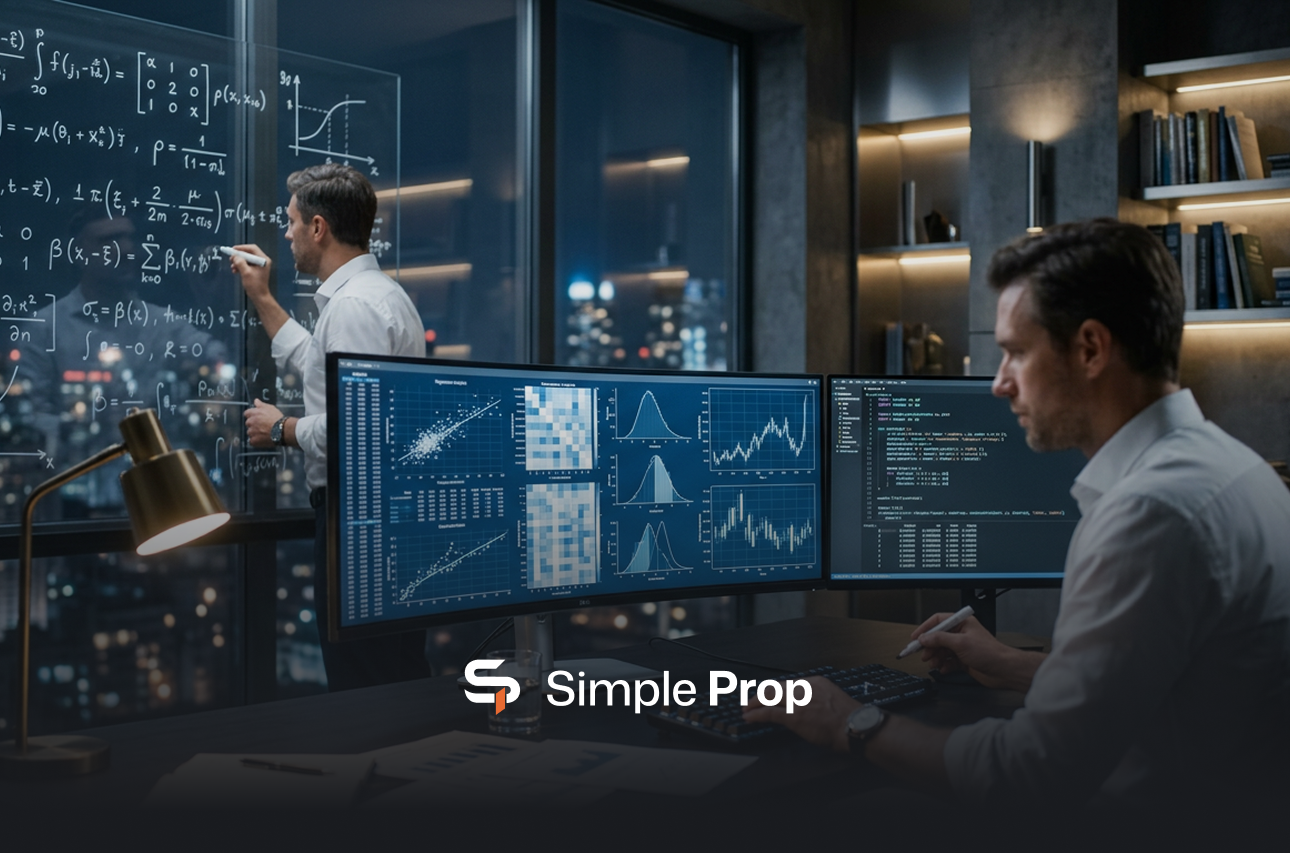
The integration of Quantitative Analysis in Prop Trading has transformed the proprietary trading landscape. By leveraging statistical analysis, probability theory, and time series analysis, traders develop data-driven strategies that maximize efficiency and profitability. This article explores how quantitative methods enhance prop trading and why they are essential for modern trading firms.
What is Quantitative Analysis in Prop Trading?
Quantitative analysis in prop trading involves using mathematical models, algorithms, and statistical techniques to analyze market data and execute trades. This approach enables traders to identify patterns, predict market movements, and minimize risks. Techniques like trend following, mean reversion, and arbitrage are central to these strategies.
The Role of Quantitative Methods in Prop Trading
- Data-Driven Strategies
Quantitative analysis relies on large datasets to uncover trading opportunities. Advanced algorithms and machine learning tools process historical and real-time data, making predictions with precision. - Risk Management
Robust risk management systems are integral to quantitative trading, ensuring capital is protected while pursuing high-return opportunities. - High-Frequency Trading (HFT)
Quantitative methods power HFT, allowing firms to execute trades within milliseconds, exploiting minute price discrepancies. - Algorithmic Trading
Automated algorithms execute trades based on predefined rules, eliminating emotional decision-making and enhancing consistency.
Frequently Asked Questions (FAQ)
1. How does quantitative analysis in prop trading differ from traditional trading?
Quantitative trading focuses on mathematical and statistical models, whereas traditional trading often relies on human intuition and fundamental analysis.
2. What techniques are used in quantitative analysis for prop trading?
Common techniques include time series analysis, trend following, mean reversion, and arbitrage. These methods identify patterns and predict price movements.
3. Can beginners use quantitative analysis in prop trading?
Yes, with the right tools and training, even beginners can leverage quantitative analysis in prop trading. Platforms offering machine learning and algorithmic trading simplify the process.
Quantitative vs. Traditional Trading
How Quantitative Analysis Enhances Prop Trading Strategies
1. Trend Following
This method identifies and capitalizes on persistent market trends. Quantitative tools analyze historical price movements to predict future trends.
2. Mean Reversion
Based on the idea that prices revert to their average over time, this strategy uses time series analysis to identify overbought or oversold conditions.
3. Arbitrage Opportunities
Quantitative models detect pricing inefficiencies between assets, enabling traders to profit from small price differences across markets.
Bullet Point Summary: Key Benefits of Quantitative Analysis in Prop Trading
- Efficiency: Speeds up decision-making and execution.
- Accuracy: Reduces errors through data-driven insights.
- Scalability: Handles large volumes of data and trades effortlessly.
- Risk Mitigation: Implements automated risk management systems.
- Adaptability: Evolves strategies using machine learning models.
Glossary
- Quantitative Analysis: The application of mathematical and statistical techniques to analyze financial data.
- Statistical Analysis: Examining data to identify patterns and trends.
- Probability Theory: The mathematical study of random events and their likelihoods.
- Time Series Analysis: A method to analyze data points collected or sequenced over time.
- Data-Driven Strategies: Trading strategies based on insights derived from analyzing large datasets.
- Trend Following: A strategy that seeks to capitalize on established market trends.
- Mean Reversion: A strategy based on the assumption that prices eventually return to their average levels.
- Arbitrage: Exploiting price differences between markets or instruments.
- Risk Management: Systems and strategies designed to limit potential losses.
- Machine Learning: A type of AI that enables systems to learn from data and improve predictions.
- High-Frequency Trading (HFT): An automated trading strategy that executes large numbers of trades at high speeds.
- Algorithmic Trading: Automated trading using predefined rules and models.
Conclusion: The Future of Quantitative Analysis in Prop Trading
The use of quantitative analysis in prop trading is no longer optional,it’s a necessity for firms aiming to stay competitive. By integrating statistical analysis, probability theory, and advanced technologies like machine learning, traders can develop strategies that are efficient, scalable, and consistently profitable.
Whether you’re interested in high-frequency trading or data-driven strategies, understanding the principles of quantitative analysis will position you for success in the fast-paced world of proprietary trading.